
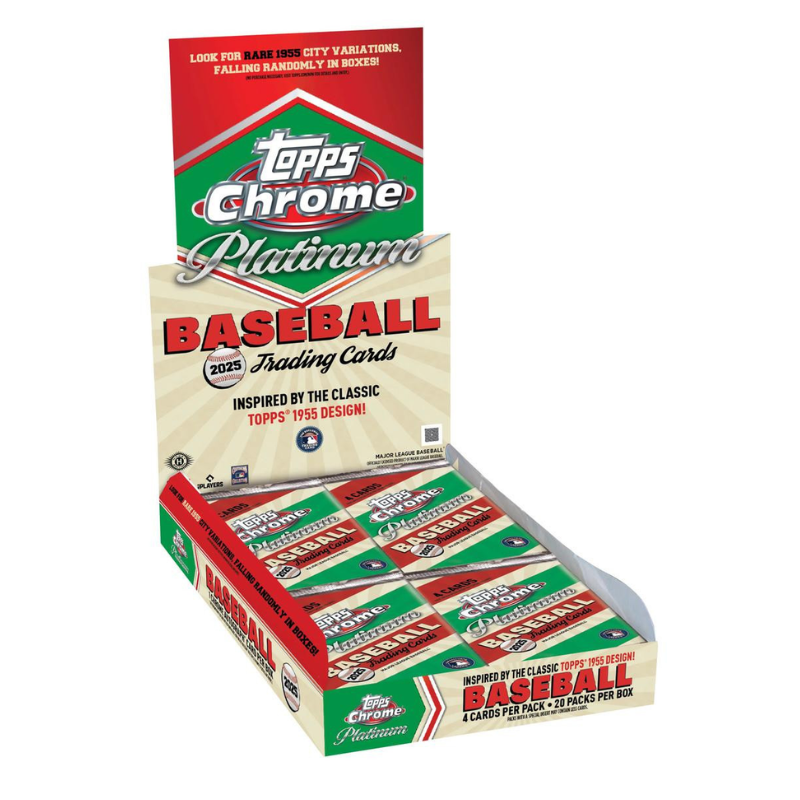
Sports card collectors often compare chrome-style cards with traditional paper-stock cards. Both formats can feature base sets, inserts, parallels and autographs, but the surface and feel are different. Chrome finishes can reflect light and show surface marks in ways that are less obvious on paper stock. Product construction varies, so buyers should check the specific set rather than assume every chromium card uses identical materials.
What collectors mean by paper cards
Traditional paper-stock cards generally have a printed surface with a more matte or lightly coated appearance. They can still have gloss, foil accents or other treatments, depending on the product. Paper cards may show edge chipping, corner whitening, print dots or surface wear. Their condition should be assessed under soft, even light rather than by looking only at the front image.
What chrome-style cards are
Chrome and chromium products use a reflective or coated presentation. The finish can make colors and photography appear vivid, but reflections can also make fingerprints, scratches, print lines and dimples more visible. A card’s exact substrate and coating depend on the product. Do not assume that every card described as Chrome has the same thickness, surface or finish.
Inspect reflective surfaces carefully
Hold a card at different angles under soft light to look for scratches and print lines. Avoid harsh direct sunlight that creates glare and makes it difficult to inspect the surface. Do not rub a suspected mark with a cloth or use cleaning products. Pressure or friction can damage the finish, and an apparent mark may be part of the original printing or foil design.
Storage and handling
Use clean, suitable sleeves and holders, and avoid forcing a card into a tight sleeve or toploader. Handle cards by their edges with clean, dry hands. Store cards away from humidity, heat and direct sunlight. For high-value cards, choose protective storage that fits the card and prevents movement without putting pressure on its corners.
Compare the checklist, not just the finish
A chrome product may include base cards, refractors, numbered parallels, inserts or autograph subsets; paper products can have their own special inserts and parallels. The finish alone does not guarantee rarity or value. Check the manufacturer’s checklist for parallel names, odds and product configuration. Do not assume a visually similar card is the same parallel or short print.
Grading considerations
Surface condition is one part of grading, alongside centering, corners and edges. Reflective cards can show tiny scratches that are difficult to see in a listing photo. A grading result is not guaranteed, and the grading fee may not make sense for every card. Review published grading standards and consider the card’s condition and collector importance before submitting.
Examples from TIBCHIT
TIBCHIT lists products such as 2025 Topps Chrome Platinum Baseball, Topps Chrome Black Football and Topps Chrome Basketball Sapphire Edition. Read the full configuration and set checklist for the product you choose.
Inspecting chrome and paper cards side by side
Use the same lighting and viewing angle when comparing cards. Paper stock may show corner whitening, edge chipping or surface marks, while chrome finishes can reveal fine scratches, print lines and fingerprints through reflection. A camera flash can hide or exaggerate defects, so do not rely on one photograph. If buying a single card online, request clear images of the front, back and any area of concern.
Storage should also fit the card stock. A chrome card may benefit from careful surface handling and a clean sleeve; a thicker paper card or memorabilia card may need a different holder size. Avoid assuming that a brand name or finish alone determines grading potential. Centering, corners, edges and surface all matter, and no online picture guarantees a specific grade.
Questions to ask when buying a single
- Is the card base, refractor, foil, parallel or insert?
- Are there surface scratches or print lines visible under angled light?
- Are corners and edges shown clearly?
- Does the card number match the stated checklist?
- Has the card been altered, cleaned or previously graded?