
Serial-numbered sports cards display a stamped or printed numbering mark that identifies a card’s place within a stated sequence. A notation such as 17/99 usually means the card is numbered 17 in a sequence of 99 copies for that specific parallel or version. Collectors use these numbers to distinguish parallels, but the number alone does not determine a card’s market value or prove that it is the rarest card in a product.
Read the numerator and denominator
The number before the slash identifies the individual card’s position within the numbered run. The number after the slash identifies the stated total for that version. A card numbered 1/25 and one numbered 24/25 belong to the same stated run size, although some collectors place a personal premium on first or last serial numbers. That preference is not a universal rule and should not be confused with an official value assessment.
Understand parallel terminology
Modern sports card releases may include color, foil, refractor, wave, shimmer or other parallel versions. Names and numbering structures differ by manufacturer and product. Two cards with the same player and base design may be different parallels with different numbering. A checklist is the best way to identify the exact version rather than relying on color alone, especially when scans or photographs make finishes look similar.
Serial numbering is not the entire story
A card’s appeal can depend on player, team, season, set design, autograph or memorabilia content, condition, and collector demand. A low-numbered card of a less collected subject is not automatically more desirable to every buyer than a higher-numbered card of a popular player. Likewise, an unnumbered short-print or special insert may have a different scarcity profile from a numbered parallel. Treat the product checklist and actual market evidence separately.
Record each version clearly
- Manufacturer and product name.
- Season or release year.
- Player or subject name.
- Card number and subset.
- Parallel name and color or finish.
- Serial number as printed.
- Condition notes, including corners, edges and surface.
Handle numbered cards carefully
Numbering is often printed or stamped on the card surface. Avoid rubbing the area with cloths or placing adhesive labels near it. Use a suitable sleeve and holder, and avoid squeezing the card into an undersized toploader. If a card is valuable or intended for grading, inspect it under soft light and avoid repeated handling.
Explore current sports card releases
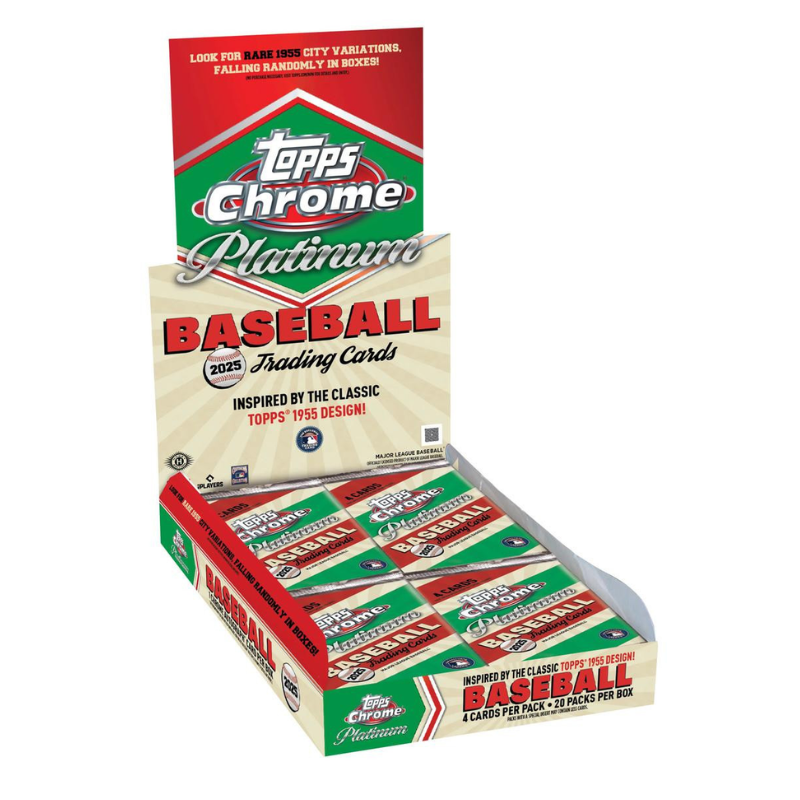
TIBCHIT carries products such as 2025 Topps Chrome Platinum Baseball, 2025/26 Panini Select Road to World Cup Soccer and 2024/25 Topps Chrome Basketball Sapphire Edition. Check each release’s checklist for the exact parallel names and numbering structure.
How serial numbers fit into a checklist
Record the exact parallel name along with the serial number. A number such as 17/99 identifies one card within a stated run, but it does not identify the card’s parallel by itself. Several parallels in one release may have different denominators. Use the manufacturer’s checklist to match the color or finish with the correct parallel name, especially when the photograph does not show the surface clearly.
When comparing two numbered cards, consider the player, set, parallel, condition and demand as separate factors. A lower denominator indicates a smaller stated run for that version, but it is not a price formula. The first or last serial number may interest some collectors, but that is a preference rather than a universal market rule.
Record serial-numbered cards accurately
- Photograph the number without glare.
- Enter the full card number and parallel name.
- Record the numerator and denominator exactly.
- Note surface and edge condition.
- Keep the card in a correctly sized sleeve and holder.