
Not every trading card fits a standard sleeve and toploader. Relic, patch, memorabilia and premium stock cards can be thicker than ordinary cards. Forcing a thick card into a standard holder can damage corners, edges or the surface. The safest approach is to measure the card or use the manufacturer’s stated thickness and choose a sleeve and holder designed for that size.
Why thickness varies
Standard trading cards use a relatively thin card stock, while memorabilia cards may include an embedded material piece or additional layers. Premium releases can also use thicker stock for design reasons. Two cards from the same product may not have identical thickness if the checklist includes different card types. Do not assume that every card in a hobby box fits the same holder.
Measure before buying holders
Use a card thickness gauge or other appropriate measuring tool and compare the result with the holder manufacturer’s specifications. Avoid measuring by pressing the card between hard objects. A holder’s point rating is often used to describe its intended thickness range, but dimensions and fit can vary between brands. Test with a low-risk card before using a holder for an important card.
Use a sleeve that fits the card
Some standard penny sleeves may be too tight for thick stock. Choose a sleeve designed for the measured card thickness and ensure the opening does not catch on the corners. If the sleeve is too loose, the card can move inside the holder. If it is too tight, the card may be stressed during insertion or removal.
Choose rigid holders carefully
Toploaders and magnetic holders are available in different thicknesses. Check the holder specifications and do not force the card into a holder that does not fit. A thick card may require a larger toploader or a specialty holder. A holder that closes with pressure can damage the card, even when the outside looks secure.
Protect relic and patch surfaces
Relic cards may have fabric or other material embedded in the card. Avoid pressure over the material window and do not try to flatten raised areas. Store the card away from direct sunlight and humidity. Check the product’s description for how the manufacturer identifies the material; “relic” or “patch” does not automatically mean that the item is game-used.
Review premium products before opening
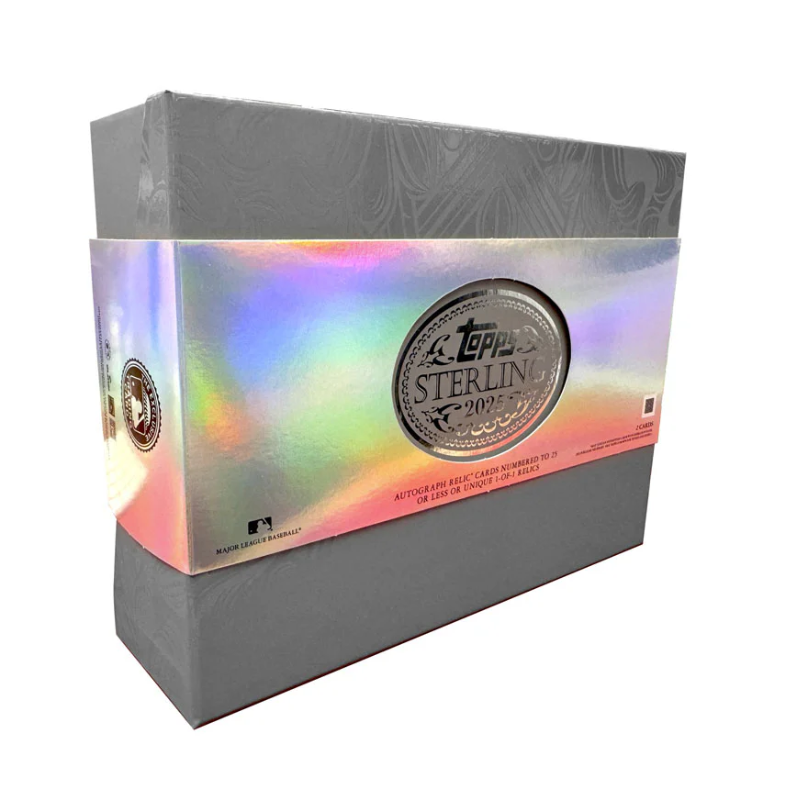
TIBCHIT lists products including 2025 Topps Sterling Baseball, 2025 Topps Dynasty Baseball and 2025 Topps Royalty UFC. These are premium-style products, so plan for different card types and holder requirements rather than assuming every card is standard thickness.
Measuring thick cards without damaging them
Use a card thickness gauge or compare the card with the holder manufacturer’s sizing guide. Do not squeeze a card between rigid objects or press on a relic window. If you are unsure whether the sleeve or holder will fit, test the fit with a less important card of the same thickness first. Materials and dimensions can vary between manufacturers, so a holder’s point rating should be checked against its published specifications.
Do not assume that a thicker card is more durable. A card with an embedded patch can still have vulnerable corners, edges and surface layers. Keep it supported while moving it between holders and avoid placing weight on top of a stack of thick cards. If a holder closes with pressure or the card bows, stop and choose a larger size.
Thickness and holder selection worksheet
- Measure the card thickness.
- Check whether the card has a raised relic or patch area.
- Choose a sleeve that fits without force.
- Match the rigid holder to the measured thickness.
- Check the assembled card for movement or pressure.